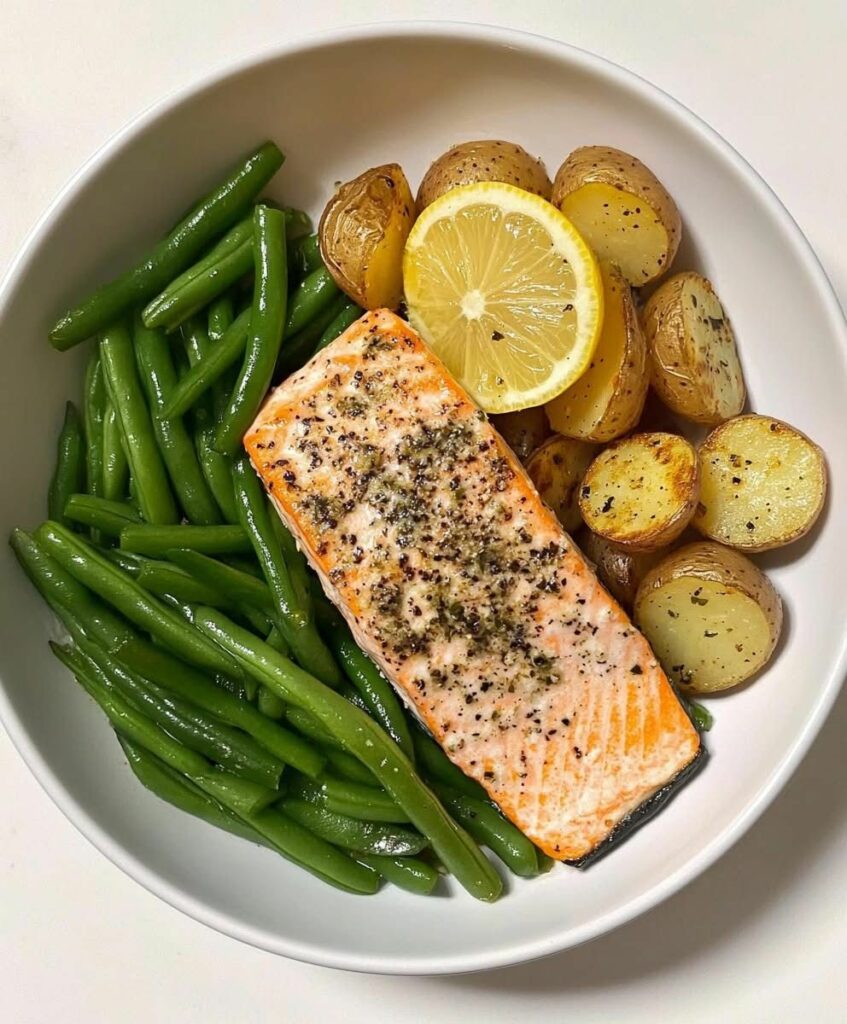
I built this plate around a question I kept getting: can one skillet really handle a starchy side and a delicate fillet without turning either into mush? The answer is yes, but only if you stop treating the potatoes and the salmon as equals. The potatoes go in first, get a head start in a hot pan, and the salmon joins late. That sequencing is the whole trick.
Advertisements1
The green beans are the negotiator here. They need high heat and a short stay, so they hit the pan after the potatoes are already tender and the salmon is resting off-heat. Think of it like a relay race rather than a dinner party – each ingredient runs its leg and hands off. If you dump everything in at once, you get steamed salmon and gray beans.
You have two paths for the potatoes: parboil them first for a softer, creamier interior, or slice them thin and cook them raw in the skillet for a waxy bite and less washing up. I tested both. Parboiling wins on texture, raw slicing wins on time, and the recipe below splits the difference with a short blanch. Neither is wrong – just know what you are trading.
Why You'll Love This Recipe
About the Ingredients
1 1/2 pounds (680 g) baby Yukon Gold potatoes, halved
Baby golds hold shape and go creamy inside. If you only have russets, cut them into 1-inch cubes and add 4 minutes to the blanch – they break down faster.
12 ounces (340 g) fresh green beans, trimmed
Look for beans that snap cleanly and squeak when rubbed together. Frozen whole beans work in a pinch; do not thaw them, just add 2 minutes to the sauté.
4 (6-ounce / 170 g) skin-on salmon fillets, about 1 inch thick
Center-cut fillets cook more evenly than tail pieces. If yours are thin, cut the sear time by a minute and check at 125°F (52°C).
3 tablespoons olive oil, divided
Regular olive oil is fine for the sear; save the fancy finishing oil for drizzling at the end. Avocado oil smokes later if you prefer a higher ceiling.
2 tablespoons unsalted butter
Butter browns and adds nuttiness to the potatoes. For dairy-free, use 2 more tablespoons olive oil, though you lose that toasty note.
4 cloves garlic, thinly sliced
Sliced garlic burns less than minced in a hot pan. Garlic powder is a poor substitute here – it scorches and turns bitter.
1 teaspoon kosher salt, plus more for the water
Kosher salt dissolves predictably; if using fine table salt, start with 3/4 teaspoon and taste before adding more.
1/2 teaspoon freshly ground black pepper
Fresh-cracked matters more than you think on a simple plate. Pre-ground pepper tastes flat and dusty by comparison.
1 lemon, halved
A squeeze at the end brightens everything. Bottled lemon juice is too sharp – use a splash of white wine vinegar instead if you are out.
2 tablespoons chopped fresh parsley or dill
Parsley is neutral; dill leans Scandinavian and plays well with salmon. Dried herbs will taste like hay here, so skip them.
Tips & Tricks
Do Not Crowd the Pan
Salmon needs dry, direct contact with hot metal to form a crust. If your skillet is under 12 inches, sear the fillets in two batches rather than steaming them together.
Salt the Salmon Early
A 10-minute salt sit pulls moisture to the surface, which you then pat dry. That dry surface is what browns instead of boils.
Control the Potato Water
Salt the blanching water like seawater – about 1 tablespoon per quart. Under-salted water is the most common reason the potatoes taste bland even after roasting.
Watch the Garlic
Add it in the last 30 seconds. Sliced garlic goes from fragrant to acrid in under a minute at searing heat.
Pro Tips
Step-by-Step Instructions
1. Blanch the Potatoes
Bring a large pot of well-salted water to a boil and cook the halved potatoes for 8 minutes, until a paring knife slides in with slight resistance. Drain and let them steam-dry for 2 minutes – dry potatoes brown, wet ones stew.
2. Season the Salmon
Pat the fillets completely dry, salt both sides, and let them sit for 10 minutes while the potatoes finish. Pat again just before searing; any surface moisture will fight the crust.
3. Crisp the Potatoes
Heat 2 tablespoons olive oil in a 12-inch skillet over medium-high heat (about 375°F / 190°C) and add the potatoes cut-side down. Cook 7 to 9 minutes without moving them until the cut faces are deep golden brown and release easily from the pan.
4. Add Butter and Garlic
Lower the heat to medium, add the butter and sliced garlic, and toss for 45 seconds until the garlic smells sweet and turns pale gold. Transfer the potatoes to a plate and wipe the pan if it looks dark.
5. Sear the Salmon
Add the remaining oil, heat until it shimmers, and lay the fillets in skin-side down. Cook 4 to 5 minutes undisturbed until the skin is crisp and the flesh turns opaque halfway up; the internal temperature should read 125°F (52°C) for medium.
6. Flip and Finish
Flip the fillets and cook 1 to 2 minutes more, until the center reads 130°F (54°C) – it will carry over to about 135°F (57°C) while resting. Move the salmon to a plate and rest it 3 minutes.
7. Sauté the Beans
Return the pan to medium-high heat, add the green beans, and cook 3 to 4 minutes, tossing often, until they blister in spots and bend without snapping. They should squeak slightly when you bite one.
8. Combine and Serve
Return the potatoes to the pan, toss with the beans, and season with pepper. Squeeze half the lemon over everything, scatter the herbs, and plate alongside the salmon with the remaining lemon wedges.
Delicious Variations
Lemon-Dill Sheet Pan Version
Roast potatoes and beans at 425°F (220°C) for 25 minutes, then add the salmon for the final 12 minutes – less crust, far less attention.
Mediterranean Twist
Swap the butter for olive oil, add 1/3 cup crumbled feta and a handful of kalamata olives with the beans, and finish with oregano.
Smoky Paprika Rub
Dust the salmon with 1/2 teaspoon smoked paprika and 1/4 teaspoon cumin before searing; it pairs well with the buttery potatoes.
How to Store Green Beans and Potatoes with Pan-Seared Salmon
Refrigerator
Store components separately in airtight containers for up to 3 days. Keep the salmon apart from the vegetables so the crust does not go soggy.
Freezer
Freeze cooked salmon and potatoes up to 2 months; skip freezing the green beans, which turn limp and watery. Thaw overnight in the refrigerator.
Reheating
Reheat potatoes and beans in a 375°F (190°C) oven for 8 minutes. Reheat salmon gently at 300°F (150°C) for 6 to 8 minutes, or flake it cold over the vegetables.
Frequently Asked Questions
Q: Can I cook the salmon and potatoes in the same pan at the same time?
No, not if you want a crisp crust and browned potatoes. Potatoes need 8 to 10 minutes of high, dry heat before the salmon goes in, and the salmon needs an undisturbed surface. Adding them together steams both.
Q: How do I know when salmon is done without a thermometer?
Press the thickest part with a finger – it should feel firm at the edges with slight give in the center, and a knife tip should meet little resistance. For accuracy, pull it at 125°F to 130°F (52°C to 54°C) and let carryover finish the job.
Q: Do I need to blanch the potatoes first?
It is not strictly required, but it is the difference between creamy centers and raw, waxy middles. If you skip it, slice the potatoes 1/4 inch thick and add 5 minutes to the skillet time.
Q: Can I use frozen green beans instead of fresh?
Yes, and you do not need to thaw them. Add them straight to the hot pan and cook 5 to 6 minutes instead of 3 to 4, since they release water and need longer to blister.
Q: What should I serve with this if I want more food?
A crusty loaf and a simple green salad are enough, since the plate already has starch, vegetable, and protein. A dollop of yogurt or a mustard vinaigrette adds richness without another pan.
Give the sequencing a fair shot before you improvise – the potatoes-first order is doing real work. Cook it once as written, then tell me whether the parboil earned its extra pot. Test it before you trust it.
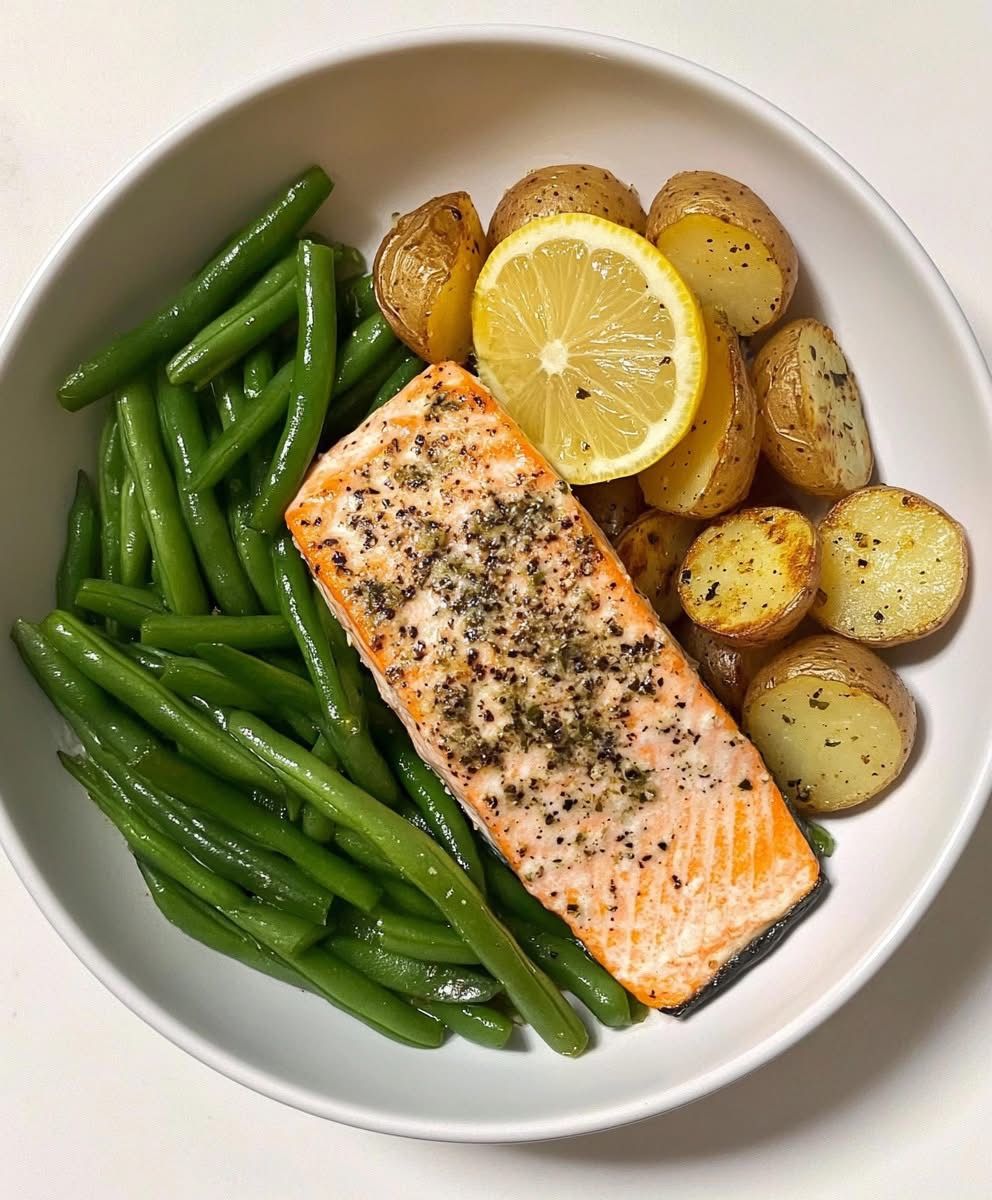
Green Beans and Potatoes with Pan-Seared Salmon
Green beans and potatoes with pan-seared salmon is a 50-minute one-pan dinner with crisp-tender beans, buttery spuds, and a golden salmon fillet.
🧂 Ingredients
- 1 1/2 pounds (680 g) baby Yukon Gold potatoes, halved
- 12 ounces (340 g) fresh green beans, trimmed
- 4 (6-ounce / 170 g) skin-on salmon fillets, about 1 inch thick
- 3 tablespoons olive oil, divided
- 2 tablespoons unsalted butter
- 4 cloves garlic, thinly sliced
- 1 teaspoon kosher salt, plus more for the water
- 1/2 teaspoon freshly ground black pepper
- 1 lemon, halved
- 2 tablespoons chopped fresh parsley or dill
📋 Instructions
- 1Blanch the Potatoes — Bring a large pot of well-salted water to a boil and cook the halved potatoes for 8 minutes, until a paring knife slides in with slight resistance. Drain and let them steam-dry for 2 minutes – dry potatoes brown, wet ones stew.
- 2Season the Salmon — Pat the fillets completely dry, salt both sides, and let them sit for 10 minutes while the potatoes finish. Pat again just before searing; any surface moisture will fight the crust.
- 3Crisp the Potatoes — Heat 2 tablespoons olive oil in a 12-inch skillet over medium-high heat (about 375°F / 190°C) and add the potatoes cut-side down. Cook 7 to 9 minutes without moving them until the cut faces are deep golden brown and release easily from the pan.
- 4Add Butter and Garlic — Lower the heat to medium, add the butter and sliced garlic, and toss for 45 seconds until the garlic smells sweet and turns pale gold. Transfer the potatoes to a plate and wipe the pan if it looks dark.
- 5Sear the Salmon — Add the remaining oil, heat until it shimmers, and lay the fillets in skin-side down. Cook 4 to 5 minutes undisturbed until the skin is crisp and the flesh turns opaque halfway up; the internal temperature should read 125°F (52°C) for medium.
- 6Flip and Finish — Flip the fillets and cook 1 to 2 minutes more, until the center reads 130°F (54°C) – it will carry over to about 135°F (57°C) while resting. Move the salmon to a plate and rest it 3 minutes.
- 7Sauté the Beans — Return the pan to medium-high heat, add the green beans, and cook 3 to 4 minutes, tossing often, until they blister in spots and bend without snapping. They should squeak slightly when you bite one.
- 8Combine and Serve — Return the potatoes to the pan, toss with the beans, and season with pepper. Squeeze half the lemon over everything, scatter the herbs, and plate alongside the salmon with the remaining lemon wedges.