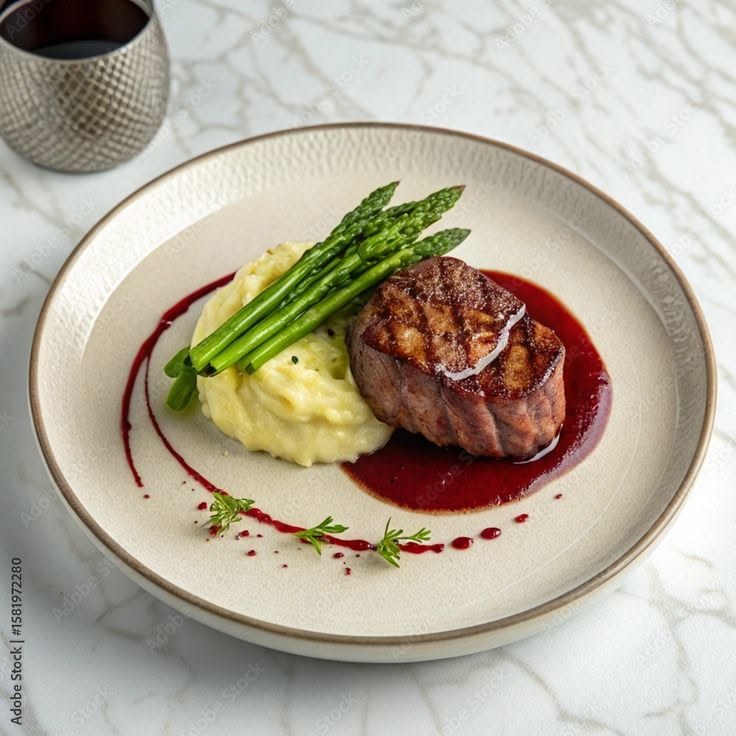
Here is the question I kept getting from readers: can you actually get a steakhouse plate at home without a cast-iron skillet, a sous-vide machine, or a $60 cut? The answer is yes, mostly, and this plate is the test case. A white plate topped with meat, mashed potatoes and asparagus next to a cup of pan jus is about as classic as dinner gets, and it is also the easiest place to learn heat control.
Advertisements1
The trade-off I want you to understand up front: a thicker steak (1 to 1.5 inches) gives you a better crust and a more forgiving window, but it takes longer and needs a rest. A thin supermarket steak cooks in four minutes and is easy to overcook. I go with 1-inch sirloin or strip here because it splits the difference, and the mashed potatoes and asparagus cook while the steak rests, so nothing sits around getting cold.
One thing a thermometer cannot do is tell you when your pan is ready. That is a visual and auditory cue, and I will give you both.
Why You'll Love This Recipe
About the Ingredients
2 lb (900 g) boneless sirloin or New York strip steaks, about 1 inch thick (2 to 3 steaks)
Look for steaks with fine white marbling and a dry, matte surface; wet meat from a sealed tray steams instead of browning. If sirloin is not available, flat iron or ribeye works, but ribeye will render more fat and needs a slightly hotter pan.
2 1/2 lb (1.1 kg) russet or Yukon Gold potatoes, peeled and cut into 1-inch chunks
Russets give a fluffier, lighter mash; Yukon Golds give a creamier, denser one. I use russets here because the steak fat needs a lighter counterpoint. Do not substitute waxy red potatoes, which turn gluey when mashed.
1/2 cup (120 ml) whole milk, warmed
Warm milk absorbs into the potatoes without cooling them down. Half-and-half makes a richer mash; skim milk makes a thinner one that will not hold a swirl.
6 tbsp (85 g) unsalted butter, divided
Divide it: 4 tablespoons for the potatoes, 2 for the asparagus and pan. Salted butter works, but then cut the added salt in the potatoes by half.
1 lb (450 g) asparagus, woody ends snapped off
Snap one stalk to find the natural break point, then line the rest up and cut at that length. Thin spears cook in 3 minutes; thick spears need 5, so check by bending one.
1 1/4 tsp kosher salt, plus more for the water
Kosher salt is coarser and easier to pinch evenly. If using fine table salt, use about 3/4 teaspoon total, since it packs more salt per spoon.
3/4 tsp freshly ground black pepper
Coarse grind gives bursts of heat; fine grind distributes more evenly. Either is fine, but grind it fresh, since pre-ground pepper tastes like dust.
2 cloves garlic, smashed
Smashed, not minced, so it flavors the pan fat without burning. Skip it if you want a cleaner pan sauce, or use 1 shallot instead.
1/2 cup (120 ml) low-sodium beef broth
Low-sodium gives you control. Dry red wine can replace half of it for a sharper jus, but reduce it for 1 minute first so the alcohol cooks off.
1 tsp cornstarch whisked into 1 tbsp cold water
This slurry thickens the jus to a light glaze. Arrowroot works too, but add it off the heat, since it thins out if boiled hard.
Tips & Tricks
Dry the Steak, Then Salt Early
Pat the steak completely dry and salt it 40 minutes ahead if you can. Surface moisture is the number one reason a steak steams instead of crusts.
Mash While Hot, Add Fat First
Drain the potatoes and let them steam-dry for 2 minutes, then mash in butter before the milk. Fat coats the starch and keeps the mash from turning pasty.
Do Not Crowd the Asparagus
One layer in the pan, or it steams and goes olive-drab. If your pan is small, cook it in two batches and keep the first warm under foil.
Pro Tips
Step-by-Step Instructions
1. Salt and Dry the Steaks
Pat the steaks dry with paper towels, then season both sides with 3/4 teaspoon of the kosher salt and the black pepper. Let them sit at room temperature for 20 minutes while you start the potatoes; cold steak drops the pan temperature and browns unevenly.
2. Boil the Potatoes
Put the potatoes in a pot, cover with cold water by 1 inch, and add a generous pinch of salt. Bring to a boil over high heat, then reduce to a simmer and cook 15 to 18 minutes, until a knife slides in with no resistance.
3. Sear the Steak
Heat a heavy skillet over medium-high until a drop of water sizzles and evaporates in about 2 seconds, roughly 400 F (205 C) surface temperature. Add 1 tablespoon of the butter and the garlic, then the steaks, and sear 3 to 4 minutes per side without moving them, until a deep brown crust forms and the internal temperature reads 130 F (54 C) for medium-rare. Move the steaks to a board and rest 8 to 10 minutes.
4. Mash the Potatoes
Drain the potatoes, return them to the warm pot for 2 minutes to steam off excess water, then mash with 4 tablespoons of the butter. Stir in the warm milk in three additions, season with the remaining 1/2 teaspoon salt, and keep warm over the lowest heat.
5. Blister the Asparagus
Pour off all but 1 tablespoon of the steak fat, return the pan to medium-high heat, and add the asparagus in a single layer. Cook 3 to 5 minutes, rolling occasionally, until the spears are bright green with browned blistered spots and bend slightly when lifted. Transfer to a plate and add the remaining 1 tablespoon butter.
6. Build the Pan Jus
Pour the broth into the hot pan and scrape up the browned bits with a wooden spoon, letting it bubble for 1 minute. Whisk in the cornstarch slurry and simmer 30 to 60 seconds, until the jus coats the back of the spoon. Taste and adjust salt.
7. Slice Against the Grain
Find the direction of the muscle fibers and slice the steak across them into 1/2-inch strips. Slicing with the grain leaves long chewy strands; across it, every bite is tender.
8. Plate and Serve
Spoon a mound of mashed potatoes onto each warm plate, lean the sliced steak against it, and lay the asparagus alongside. Spoon the jus over the meat and serve immediately, with the extra jus in a small cup on the side.
Delicious Variations
Garlic-Herb Butter Steak
Mash 2 tablespoons softened butter with 1 minced garlic clove and 1 teaspoon chopped parsley, then melt it over the sliced steak just before serving.
Crispy Smashed Potatoes
Boil the potatoes, smash them flat on an oiled sheet pan, and roast at 425 F (220 C) for 25 minutes instead of mashing, for a crunchier plate.
Lemon-Parmesan Asparagus
Skip the pan butter on the asparagus and finish with a squeeze of lemon and 2 tablespoons grated Parmesan for a sharper, lighter side.
How to Store Seared Steak with Mashed Potatoes and Asparagus
Refrigerator
Store steak, potatoes, and asparagus in separate airtight containers for up to 3 days. Keep the jus in its own small jar so the potatoes do not soak it up.
Freezer
Freeze sliced steak and mashed potatoes separately for up to 2 months; skip freezing the asparagus, which turns limp and watery. Thaw overnight in the refrigerator.
Reheating
Reheat steak gently in a 300 F (150 C) oven for 8 to 10 minutes, or sear 30 seconds per side in a hot pan. Reheat potatoes with a splash of milk, covered, in the microwave in 30-second bursts, stirring between each.
Frequently Asked Questions
Q: What temperature should steak be for medium-rare?
Pull the steak off the heat at 130 F (54 C) for medium-rare, since carryover cooking will bring it to about 135 F (57 C) while it rests. For medium, target 140 F (60 C). Always check the thickest part, not near the bone or the edge.
Q: Why did my mashed potatoes turn gluey?
Overworking the potatoes releases starch, which turns the mash sticky and pasty. Mash while hot but stop as soon as the lumps are gone, and never use a food processor or an immersion blender for this.
Q: Can I make this dinner ahead of time?
You can boil and mash the potatoes up to a day ahead and reheat them with a splash of milk, but sear the steak right before serving. A rested steak holds for about 15 minutes in a 200 F (95 C) oven, no longer, or it overshoots doneness.
Q: How do I keep asparagus from getting soggy?
Use high heat, a single layer, and a dry pan, and cook it for only 3 to 5 minutes. Wet asparagus or a crowded pan traps steam, which is what turns the spears soft and dull green.
Q: What cut of steak is best for pan-searing?
Sirloin, strip, and flat iron are the most reliable for a home pan because they are tender and about 1 inch thick. Ribeye has more fat and flavor but flares up, and lean cuts like eye of round turn tough fast.
Give this plate a try on a weeknight when you want dinner to feel like an occasion without the fuss. If you make it, tell me which cut you used and whether you went with russets or Yukons. Test it before you trust it.
Seared Steak with Mashed Potatoes and Asparagus
Juicy seared steak with creamy mashed potatoes and crisp-tender asparagus, all on one plate in 50 minutes. A steakhouse dinner made simple at home.
🧂 Ingredients
- 2 lb (900 g) boneless sirloin or New York strip steaks, about 1 inch thick (2 to 3 steaks)
- 2 1/2 lb (1.1 kg) russet or Yukon Gold potatoes, peeled and cut into 1-inch chunks
- 1/2 cup (120 ml) whole milk, warmed
- 6 tbsp (85 g) unsalted butter, divided
- 1 lb (450 g) asparagus, woody ends snapped off
- 1 1/4 tsp kosher salt, plus more for the water
- 3/4 tsp freshly ground black pepper
- 2 cloves garlic, smashed
- 1/2 cup (120 ml) low-sodium beef broth
- 1 tsp cornstarch whisked into 1 tbsp cold water
📋 Instructions
- 1Salt and Dry the Steaks — Pat the steaks dry with paper towels, then season both sides with 3/4 teaspoon of the kosher salt and the black pepper. Let them sit at room temperature for 20 minutes while you start the potatoes; cold steak drops the pan temperature and browns unevenly.
- 2Boil the Potatoes — Put the potatoes in a pot, cover with cold water by 1 inch, and add a generous pinch of salt. Bring to a boil over high heat, then reduce to a simmer and cook 15 to 18 minutes, until a knife slides in with no resistance.
- 3Sear the Steak — Heat a heavy skillet over medium-high until a drop of water sizzles and evaporates in about 2 seconds, roughly 400 F (205 C) surface temperature. Add 1 tablespoon of the butter and the garlic, then the steaks, and sear 3 to 4 minutes per side without moving them, until a deep brown crust forms and the internal temperature reads 130 F (54 C) for medium-rare. Move the steaks to a board and rest 8 to 10 minutes.
- 4Mash the Potatoes — Drain the potatoes, return them to the warm pot for 2 minutes to steam off excess water, then mash with 4 tablespoons of the butter. Stir in the warm milk in three additions, season with the remaining 1/2 teaspoon salt, and keep warm over the lowest heat.
- 5Blister the Asparagus — Pour off all but 1 tablespoon of the steak fat, return the pan to medium-high heat, and add the asparagus in a single layer. Cook 3 to 5 minutes, rolling occasionally, until the spears are bright green with browned blistered spots and bend slightly when lifted. Transfer to a plate and add the remaining 1 tablespoon butter.
- 6Build the Pan Jus — Pour the broth into the hot pan and scrape up the browned bits with a wooden spoon, letting it bubble for 1 minute. Whisk in the cornstarch slurry and simmer 30 to 60 seconds, until the jus coats the back of the spoon. Taste and adjust salt.
- 7Slice Against the Grain — Find the direction of the muscle fibers and slice the steak across them into 1/2-inch strips. Slicing with the grain leaves long chewy strands; across it, every bite is tender.
- 8Plate and Serve — Spoon a mound of mashed potatoes onto each warm plate, lean the sliced steak against it, and lay the asparagus alongside. Spoon the jus over the meat and serve immediately, with the extra jus in a small cup on the side.

Priya writes about learning and working with technology without the marketing gloss. Her angle is explaining how tools actually behave, where they fail, and what a reasonable expectation looks like for a non-expert. She prefers concrete comparisons and honest trade-offs over rankings.