Here's the question I kept asking as a beginner: why does my brisket come out dry on one end and chewy on the other? The answer, it turns out, is less about secret ingredients and more about two things a lot of recipes gloss over, which are the thickness of your cut and how steadily your pot holds heat. Braising is basically a low, slow bath of steam and liquid, and brisket needs that bath to break down its connective tissue without boiling dry.
Advertisements1
I tested this two ways: a covered Dutch oven in the oven versus a covered pot on the stovetop. The oven won for me because the heat surrounds the pot evenly, so the flat end doesn't overcook while the point catches up. A stovetop works too, but only if your smallest burner can hold a true simmer, and many can't. That's the trade-off: the oven takes a little longer to come up to temperature, but it's far more forgiving.
This version leans on paprika, onions, and a splash of vinegar for a gravy that tastes like it simmered all day. You'll get honest timing cues and a thermometer check, because a pot can't tell you when the meat is ready, only your fork can.
Why You'll Love This Recipe
About the Ingredients
3 to 3.5 lb (1.4 to 1.6 kg) beef brisket, flat or point, trimmed to about 1/4 inch fat
Ask the butcher for a piece of even thickness; a lopsided cut cooks unevenly. If only a whole packer brisket is available, cut it down and freeze the rest for another braise.
2 1/2 tsp (15 g) kosher salt, plus more to taste
Kosher salt is coarser than table salt, so measure by weight if you can. If using fine table salt, start with 1 3/4 tsp to avoid oversalting.
1 1/2 tsp (4 g) smoked paprika
Smoked paprika adds a campfire note; sweet paprika works but tastes flatter. Buy in small jars, since paprika loses its punch after about a year.
1 tsp (2 g) freshly ground black pepper
Pre-ground pepper is fine in a pinch but tastes duller. Grind just before rubbing so the aroma actually reaches the meat.
2 tbsp (30 ml) neutral oil, such as canola
Canola has a high smoke point for the sear. Olive oil works but will smoke at this heat; use light olive oil rather than extra-virgin if that's what you have.
3 medium yellow onions (about 1 lb / 450 g), thinly sliced
Yellow onions give the sweetest, deepest gravy. Red onions turn the sauce an odd pink; white onions are sharper but acceptable.
4 garlic cloves, smashed and peeled
Smashed cloves release flavor slowly without burning. Jarred minced garlic is a shortcut but tastes more sulfurous here.
2 tbsp (30 g) tomato paste
Tomato paste adds body and a little acidity. If you only have tomato sauce, use 1/4 cup and reduce the broth by the same amount.
2 tbsp (15 g) all-purpose flour
Flour thickens the gravy around the meat. For gluten-free, swap in 1 tbsp cornstarch whisked into the liquid at the end instead.
1 1/2 cups (360 ml) low-sodium beef broth
Low-sodium lets you control the salt. Chicken broth works as a substitute but gives a lighter, less beefy gravy.
1 tbsp (15 ml) red wine vinegar
The acid cuts through the fat. Cider vinegar or a squeeze of lemon at the end are fine stand-ins.
2 dried bay leaves
Bay leaves add a subtle background note. Fresh bay is stronger, so use one leaf instead of two.
Tips & Tricks
Don't skip the dry rub rest
salting the brisket 30 minutes ahead (or overnight in the fridge) seasons the meat deeper than salting right before searing.
Sear in batches if needed
crowding the pot steams the meat instead of browning it, and browning is where most of the flavor comes from.
Keep the liquid at a bare simmer
a rolling boil tightens the muscle fibers and makes brisket stringy. You want lazy bubbles, not a churn.
Slice against the grain
look at the direction the muscle fibers run, then cut perpendicular to them. Slicing with the grain gives you chewy slabs no matter how long you braised.
Pro Tips
Step-by-Step Instructions
1. Season the brisket
Pat the brisket dry with paper towels, then rub all over with the kosher salt, smoked paprika, and black pepper. Let it sit at room temperature for 30 minutes while you prep the onions, which helps it cook more evenly.
2. Heat the oven
Set a rack in the lower third of the oven and preheat to 325 F (165 C). A moderate oven keeps the braise at a gentle simmer without drying out the exposed top of the meat.
3. Sear both sides
Heat the oil in a Dutch oven over medium-high heat until it shimmers, about 2 minutes. Sear the brisket 4 to 5 minutes per side until deeply golden brown, then transfer to a plate; you're building the flavor base, not cooking it through.
4. Soften the onions
Lower the heat to medium and add the onions with a pinch of salt. Cook 8 to 10 minutes, stirring, until softened and lightly golden at the edges; if they start to scorch, add a splash of broth.
5. Bloom the paste
Stir in the garlic and tomato paste and cook 1 minute until the paste darkens to a brick red and smells sweet rather than raw. Sprinkle the flour over the onions and stir 1 minute to coat.
6. Build the braise
Pour in the broth and vinegar, scraping up the browned bits from the bottom with a wooden spoon. Nestle the brisket back in, fat side up, and tuck in the bay leaves; the liquid should come about halfway up the meat, not cover it.
7. Braise covered
Cover the pot and slide it into the oven. Braise 2 hours 30 minutes to 3 hours, checking at the 2-hour mark, until a fork slides into the thickest part with almost no resistance and the internal temperature reads 200 to 205 F (93 to 96 C).
8. Rest the meat
Lift the brisket onto a cutting board and tent loosely with foil for 20 minutes. Meanwhile, simmer the braising liquid on the stovetop 5 to 8 minutes until it coats the back of a spoon, then taste and adjust salt.
9. Slice and serve
Slice the brisket against the grain into 1/2-inch slices and return them to the gravy, or spoon the sauce over the top. Serve with mashed potatoes or crusty bread to catch every drop.
Delicious Variations
Smoky chipotle version
add 2 minced canned chipotles with the tomato paste for a gentle heat that plays well with the paprika.
Beer-braised brisket
swap 1 cup of the broth for a dark lager and reduce the vinegar to 2 tsp for a maltier gravy.
Asian-style braise
replace the paprika and tomato paste with 3 tbsp soy sauce, 1 tbsp brown sugar, a 1-inch piece of ginger, and 2 star anise.
How to Store Braised Beef Brisket
Refrigerator
Store sliced brisket in its gravy in an airtight container for up to 4 days; the fat will solidify on top, which makes it easy to lift off before reheating.
Freezer
Freeze portions in gravy for up to 3 months in freezer-safe containers, leaving 1/2 inch of headspace; thaw overnight in the refrigerator before reheating.
Reheating
Reheat gently in a covered pan over low heat with a splash of broth, about 8 to 10 minutes, until steaming but not bubbling hard, which keeps the slices from drying out.
Frequently Asked Questions
Q: How long does it take to braise beef brisket until tender?
Expect about 2 hours 30 minutes to 3 hours in a 325 F (165 C) oven for a 3-pound brisket. Smaller or thinner cuts may finish closer to 2 hours, so start checking with a fork at the 2-hour mark.
Q: Should I braise brisket covered or uncovered?
Covered, for almost the entire cook. The lid traps steam, which is what actually tenderizes the meat; uncover only at the end if you want the sauce to reduce and glaze the top.
Q: What is the best internal temperature for braised brisket?
Most briskets turn fork-tender around 200 to 205 F (93 to 96 C) internal. That said, temperature is a guide, not a guarantee, so confirm with the fork test before pulling it out.
Q: Why did my braised brisket come out dry?
Usually because the oven was too hot or the meat braised too long past tenderness. Keep the liquid at a bare simmer and check early; once the fibers collapse, extra time squeezes moisture out rather than adding it.
Q: Can I make braised beef brisket ahead of time?
Yes, and it often tastes better the next day. Cool it in the gravy, refrigerate up to 4 days, then slice and reheat gently; the flavors meld and the fat is easy to skim off.
If you make this, pay attention to the fork test rather than the timer, because every brisket is a slightly different shape and thickness. Try the stovetop version once too and tell me which one your pot handles better. Test it before you trust it.
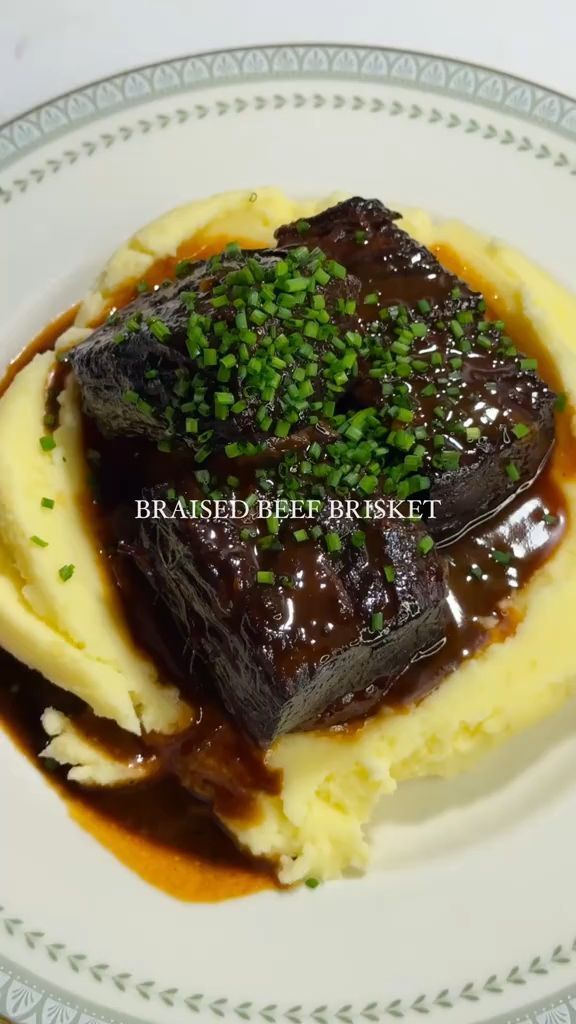
Braised Beef Brisket
Braised beef brisket turns a tough, budget cut into fork-soft, deeply savory slices with a rich onion-and-paprika gravy you'll want to spoon over everything.
🧂 Ingredients
- 3 to 3.5 lb (1.4 to 1.6 kg) beef brisket, flat or point, trimmed to about 1/4 inch fat
- 2 1/2 tsp (15 g) kosher salt, plus more to taste
- 1 1/2 tsp (4 g) smoked paprika
- 1 tsp (2 g) freshly ground black pepper
- 2 tbsp (30 ml) neutral oil, such as canola
- 3 medium yellow onions (about 1 lb / 450 g), thinly sliced
- 4 garlic cloves, smashed and peeled
- 2 tbsp (30 g) tomato paste
- 2 tbsp (15 g) all-purpose flour
- 1 1/2 cups (360 ml) low-sodium beef broth
- 1 tbsp (15 ml) red wine vinegar
- 2 dried bay leaves
📋 Instructions
- 1Season the brisket — Pat the brisket dry with paper towels, then rub all over with the kosher salt, smoked paprika, and black pepper. Let it sit at room temperature for 30 minutes while you prep the onions, which helps it cook more evenly.
- 2Heat the oven — Set a rack in the lower third of the oven and preheat to 325 F (165 C). A moderate oven keeps the braise at a gentle simmer without drying out the exposed top of the meat.
- 3Sear both sides — Heat the oil in a Dutch oven over medium-high heat until it shimmers, about 2 minutes. Sear the brisket 4 to 5 minutes per side until deeply golden brown, then transfer to a plate; you're building the flavor base, not cooking it through.
- 4Soften the onions — Lower the heat to medium and add the onions with a pinch of salt. Cook 8 to 10 minutes, stirring, until softened and lightly golden at the edges; if they start to scorch, add a splash of broth.
- 5Bloom the paste — Stir in the garlic and tomato paste and cook 1 minute until the paste darkens to a brick red and smells sweet rather than raw. Sprinkle the flour over the onions and stir 1 minute to coat.
- 6Build the braise — Pour in the broth and vinegar, scraping up the browned bits from the bottom with a wooden spoon. Nestle the brisket back in, fat side up, and tuck in the bay leaves; the liquid should come about halfway up the meat, not cover it.
- 7Braise covered — Cover the pot and slide it into the oven. Braise 2 hours 30 minutes to 3 hours, checking at the 2-hour mark, until a fork slides into the thickest part with almost no resistance and the internal temperature reads 200 to 205 F (93 to 96 C).
- 8Rest the meat — Lift the brisket onto a cutting board and tent loosely with foil for 20 minutes. Meanwhile, simmer the braising liquid on the stovetop 5 to 8 minutes until it coats the back of a spoon, then taste and adjust salt.
- 9Slice and serve — Slice the brisket against the grain into 1/2-inch slices and return them to the gravy, or spoon the sauce over the top. Serve with mashed potatoes or crusty bread to catch every drop.