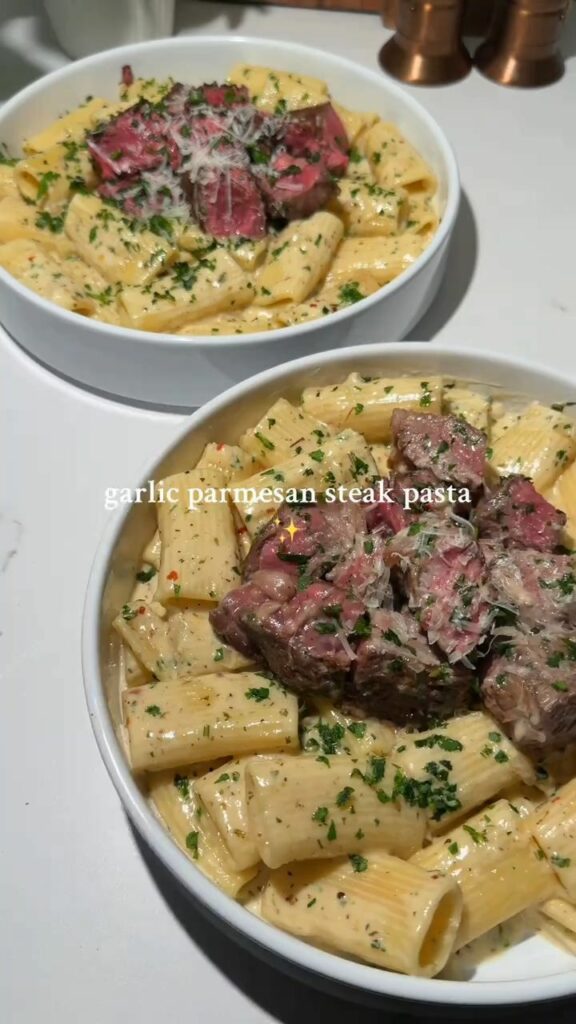
Garlic Parmesan steak pasta is a weeknight-adjacent dish that rewards patience more than speed. Before you touch a knife, run this numbered diagnostic: one, confirm your skillet is at least 12 inches and heavy-bottomed; two, check that your steak is 1 to 1.25 inches thick so it sears before it steams; three, verify your parmesan is a block you grate yourself, not the shaker can; four, read your instant-read thermometer is calibrated in ice water. If any item fails, fix it before proceeding.
Advertisements1
The method is deliberately split: the steak sears first and rests while the pasta cooks in the same pan, picking up the browned fond. That fond is where the garlic and parmesan flavor actually lives, so do not scrub the pan between stages.
Safety first: raw beef juices must never contact the cooked pasta or the serving bowl. Use one board for the raw steak and a clean plate for the rested meat, and wash the thermometer probe in hot soapy water between checks. Measure twice, then measure again.
Why You'll Love This Recipe
About the Ingredients
1.5 lb (680 g) sirloin steak, about 1 to 1.25 inches thick
Ask the butcher for a center-cut sirloin with even thickness; uneven steaks sear unevenly. Ribeye or strip steak substitutes directly, but reduce the sear time by 30 seconds per side for thinner cuts.
12 oz (340 g) penne rigate or rigatoni
Ridged tubes hold the parmesan cream better than smooth shapes. Fusilli or cavatappi are fine substitutes; avoid thin spaghetti, which overcooks in the residual heat.
2 tbsp (30 ml) neutral oil, such as canola
Neutral oil has a smoke point above 400F (204C), which you need for a hard sear. Do not substitute extra-virgin olive oil here; it will smoke and turn bitter.
1 tbsp (14 g) unsalted butter
Butter goes in after searing, never before, to keep the milk solids from burning. Salted butter works if you cut the added salt in the sauce by half.
6 garlic cloves, minced (about 2 tbsp)
Buy firm, tight heads and discard any clove with a green sprout, which tastes harsh. Jarred minced garlic is a last resort; it burns faster because of its moisture.
1 cup (240 ml) heavy cream
Use cream labeled 36 to 40 percent butterfat so the sauce emulsifies and does not break. Half-and-half substitutes but will yield a noticeably thinner sauce.
1 cup (240 ml) low-sodium beef broth
Low-sodium lets you control the final seasoning since parmesan is already salty. Chicken broth or a dry white wine cut 50/50 with water both substitute well.
1.5 cups (150 g) freshly grated Parmigiano-Reggiano
Grate on the fine side of a box grater and pack loosely when measuring. Pre-shredded parmesan contains anti-caking starch that clumps in cream sauces.
1/2 tsp (3 g) kosher salt, plus more for the pasta water
Kosher salt dissolves predictably; use 1 tbsp per gallon of pasta water. If using fine table salt, reduce the pasta water amount to 2 tsp.
1/2 tsp (1 g) freshly cracked black pepper
Crack it just before adding so the oils stay volatile and aromatic. White pepper substitutes for a milder, less visible finish.
2 tbsp chopped fresh flat-leaf parsley
Stir in off the heat so it stays green and bright. Basil or chives substitute, but add them at the very end as well.
Tips & Tricks
Do Not Crowd the Pan
A cold, crowded skillet steams the steak to gray; sear in batches or use a 12-inch pan minimum so the surface stays above 400F (204C).
Grate the Parmesan Fine
Coarse shreds melt unevenly and leave oily pools; fine grating lets the cheese disperse into the cream in seconds.
Reserve Pasta Water
One cup of starchy cooking water is your insurance policy if the sauce tightens; add it a splash at a time, never plain water.
Rest Before Slicing
Cutting the steak immediately dumps the juices onto the board instead of keeping them in the meat; five minutes minimum, ten is better.
Pro Tips
Step-by-Step Instructions
1. Dry and Season the Steak
Pat the steak completely dry with paper towels, then season both sides with the kosher salt and cracked pepper. Let it sit at room temperature for 20 minutes; a cold center will not reach 130F (54C) evenly.
2. Sear at High Heat
Heat the neutral oil in a 12-inch heavy skillet over medium-high until it shimmers and a drop of water flickers, roughly 400F (204C). Sear the steak undisturbed for 4 minutes per side until deeply browned, then check the internal temperature with an instant-read thermometer; pull at 130F (54C) for medium-rare. Transfer to a clean plate and rest 5 to 10 minutes. Do not wash the pan.
3. Boil the Pasta
Bring a large pot of water to a rolling boil with 1 tbsp kosher salt and cook the penne 1 minute shy of the package time until al dente, with a firm bite at the center. Reserve 1 cup of the cooking water, then drain.
4. Bloom the Garlic
Lower the skillet to medium and melt the butter in the reserved fond. Add the minced garlic and stir constantly for 45 to 60 seconds until fragrant and pale gold, not brown; burnt garlic turns the whole sauce bitter.
5. Build the Sauce
Pour in the beef broth and scrape the browned bits loose with a wooden spoon, then add the cream and bring to a gentle simmer at about 200F (93C). Simmer 4 to 5 minutes until the sauce coats the back of a spoon.
6. Melt the Parmesan
Turn off the heat and whisk in the grated Parmigiano-Reggiano a handful at a time until the sauce is smooth and glossy, with no visible grains. Taste and adjust salt only after the cheese is fully in.
7. Combine Pasta and Sauce
Add the drained penne to the skillet and toss over low heat for 1 to 2 minutes until every tube is coated, loosening with reserved pasta water a splash at a time if it tightens. The sauce should look slightly loose before it rests.
8. Slice and Finish
Slice the rested steak against the grain into 1/4-inch strips, discarding any juices on the resting plate. Fold the steak and parsley into the pasta off the heat, then serve immediately in warmed bowls.
Delicious Variations
Mushroom Version
Sauté 8 oz (225 g) sliced cremini in the butter before the garlic until golden brown, then proceed; the mushrooms add an earthy depth that stands up to the parmesan.
Spicy Arrabbiata Twist
Swap the cream for 1 cup (240 ml) crushed tomatoes and add 1/2 tsp red pepper flakes with the garlic for a brighter, dairy-light sauce.
Chicken Substitute
Replace the sirloin with 1.5 lb (680 g) boneless chicken thighs seared to 175F (79C); they stay juicy and cost less per serving.
How to Store Garlic Parmesan Steak Pasta
Refrigerator
Store in an airtight container for up to 3 days; keep the sliced steak separate from the pasta if possible so it does not toughen.
Freezer
Freeze the pasta and sauce alone for up to 2 months in a sealed container; do not freeze the sliced steak, which turns mealy.
Reheating
Reheat gently on the stovetop over low heat with 2 tbsp broth or water per serving, stirring until loosened; microwave in 30-second bursts, never on high.
Frequently Asked Questions
Q: What cut of steak is best for steak pasta?
Sirloin is the best all-purpose choice because it sears quickly and stays tender when sliced thin. Ribeye gives more richness and strip steak more chew, but both work if you keep the thickness near 1 inch.
Q: Can I make garlic parmesan steak pasta ahead of time?
You can make the sauce and pasta up to 2 days ahead, but sear the steak fresh the day you serve it. Reheated steak loses its crust and turns gray within hours.
Q: Why did my parmesan sauce turn grainy?
Grainy sauce almost always means the heat was too high when the cheese went in. Add parmesan with the burner off and whisk constantly, and grate it finely rather than shredding it.
Q: How do I keep the steak from overcooking when I add it to the pasta?
Pull the steak at 130F (54C) and rest it fully before slicing, then fold it in off the heat. The pasta should be warm, not simmering, when the meat goes back in.
Q: Is this dish gluten-free?
Not as written, because penne contains wheat. Use a certified gluten-free pasta and check that your beef broth is gluten-free; the rest of the ingredients are naturally free of it.
If your skillet is warped, your thermometer is uncalibrated, or your parmesan is the shaker kind, fix those before cooking; a recipe cannot outrun bad equipment. For persistent food-safety questions about beef doneness, consult your local food safety authority or a qualified chef instructor rather than guessing. Measure twice, then measure again.
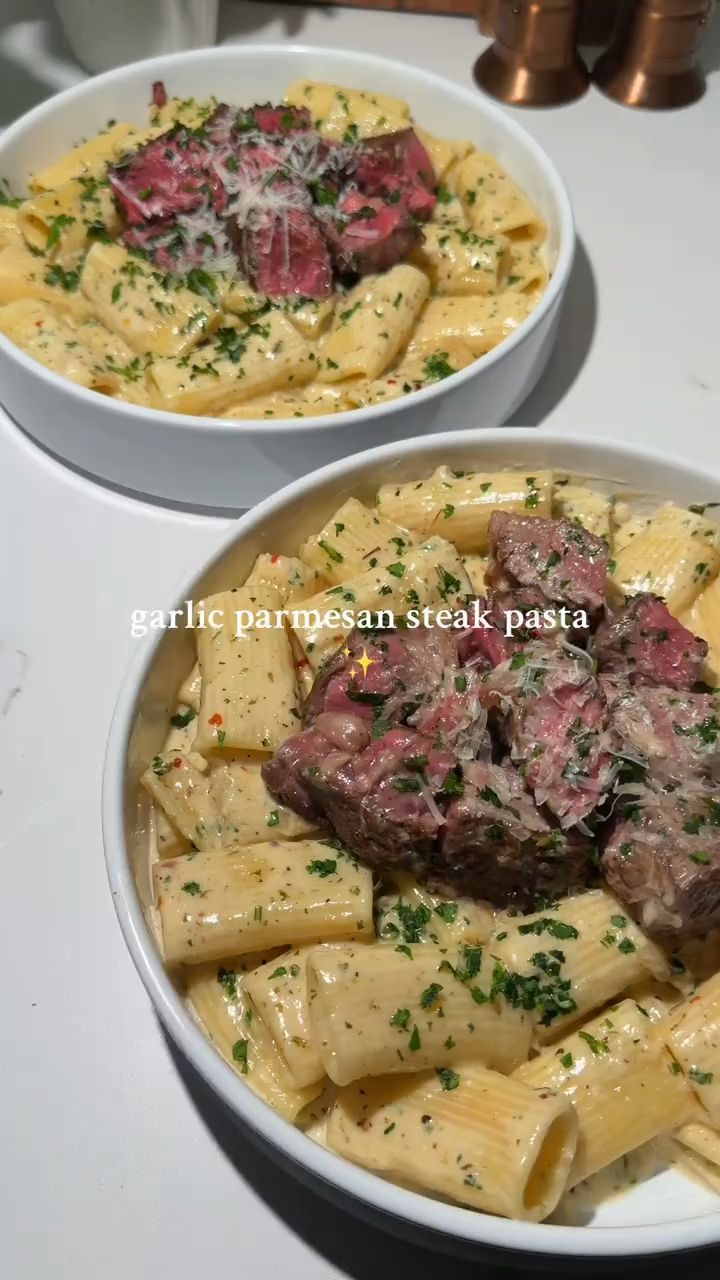
Garlic Parmesan Steak Pasta
Garlic Parmesan steak pasta pairs seared sirloin with creamy parmesan noodles in one skillet, giving you a steakhouse dinner with a single pan to wash.
🧂 Ingredients
- 1.5 lb (680 g) sirloin steak, about 1 to 1.25 inches thick
- 12 oz (340 g) penne rigate or rigatoni
- 2 tbsp (30 ml) neutral oil, such as canola
- 1 tbsp (14 g) unsalted butter
- 6 garlic cloves, minced (about 2 tbsp)
- 1 cup (240 ml) heavy cream
- 1 cup (240 ml) low-sodium beef broth
- 1.5 cups (150 g) freshly grated Parmigiano-Reggiano
- 1/2 tsp (3 g) kosher salt, plus more for the pasta water
- 1/2 tsp (1 g) freshly cracked black pepper
- 2 tbsp chopped fresh flat-leaf parsley
📋 Instructions
- 1Dry and Season the Steak — Pat the steak completely dry with paper towels, then season both sides with the kosher salt and cracked pepper. Let it sit at room temperature for 20 minutes; a cold center will not reach 130F (54C) evenly.
- 2Sear at High Heat — Heat the neutral oil in a 12-inch heavy skillet over medium-high until it shimmers and a drop of water flickers, roughly 400F (204C). Sear the steak undisturbed for 4 minutes per side until deeply browned, then check the internal temperature with an instant-read thermometer; pull at 130F (54C) for medium-rare. Transfer to a clean plate and rest 5 to 10 minutes. Do not wash the pan.
- 3Boil the Pasta — Bring a large pot of water to a rolling boil with 1 tbsp kosher salt and cook the penne 1 minute shy of the package time until al dente, with a firm bite at the center. Reserve 1 cup of the cooking water, then drain.
- 4Bloom the Garlic — Lower the skillet to medium and melt the butter in the reserved fond. Add the minced garlic and stir constantly for 45 to 60 seconds until fragrant and pale gold, not brown; burnt garlic turns the whole sauce bitter.
- 5Build the Sauce — Pour in the beef broth and scrape the browned bits loose with a wooden spoon, then add the cream and bring to a gentle simmer at about 200F (93C). Simmer 4 to 5 minutes until the sauce coats the back of a spoon.
- 6Melt the Parmesan — Turn off the heat and whisk in the grated Parmigiano-Reggiano a handful at a time until the sauce is smooth and glossy, with no visible grains. Taste and adjust salt only after the cheese is fully in.
- 7Combine Pasta and Sauce — Add the drained penne to the skillet and toss over low heat for 1 to 2 minutes until every tube is coated, loosening with reserved pasta water a splash at a time if it tightens. The sauce should look slightly loose before it rests.
- 8Slice and Finish — Slice the rested steak against the grain into 1/4-inch strips, discarding any juices on the resting plate. Fold the steak and parsley into the pasta off the heat, then serve immediately in warmed bowls.